
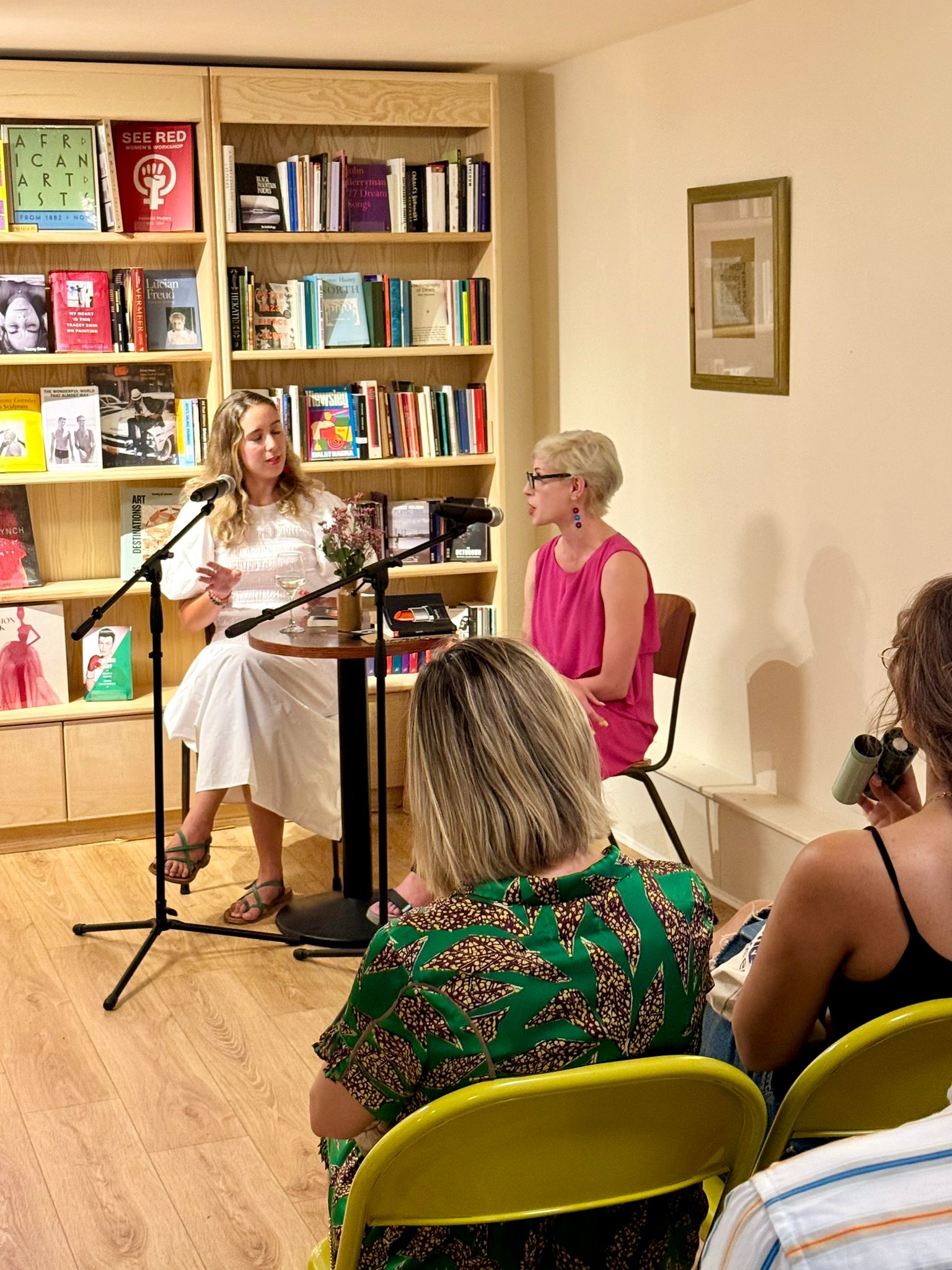
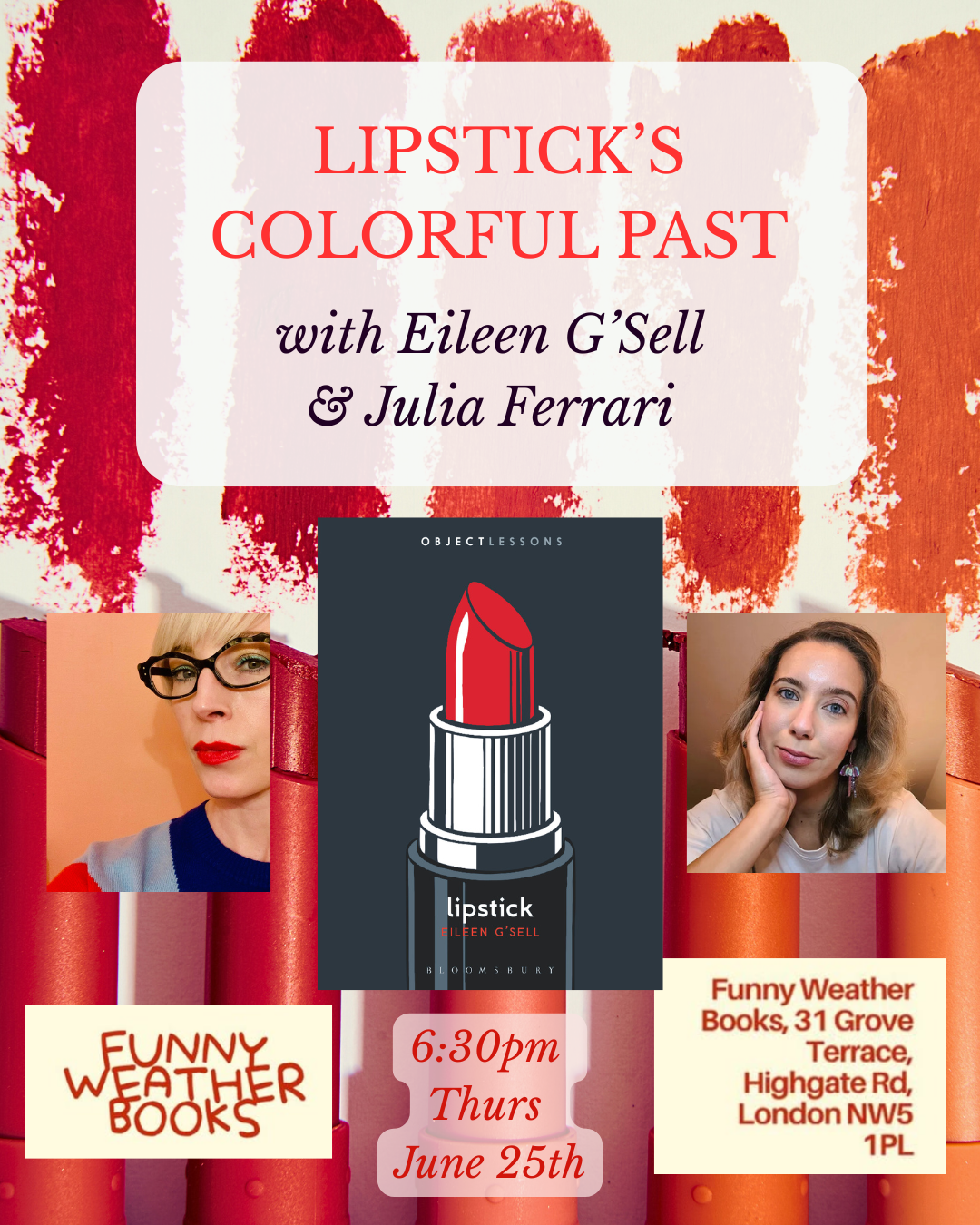
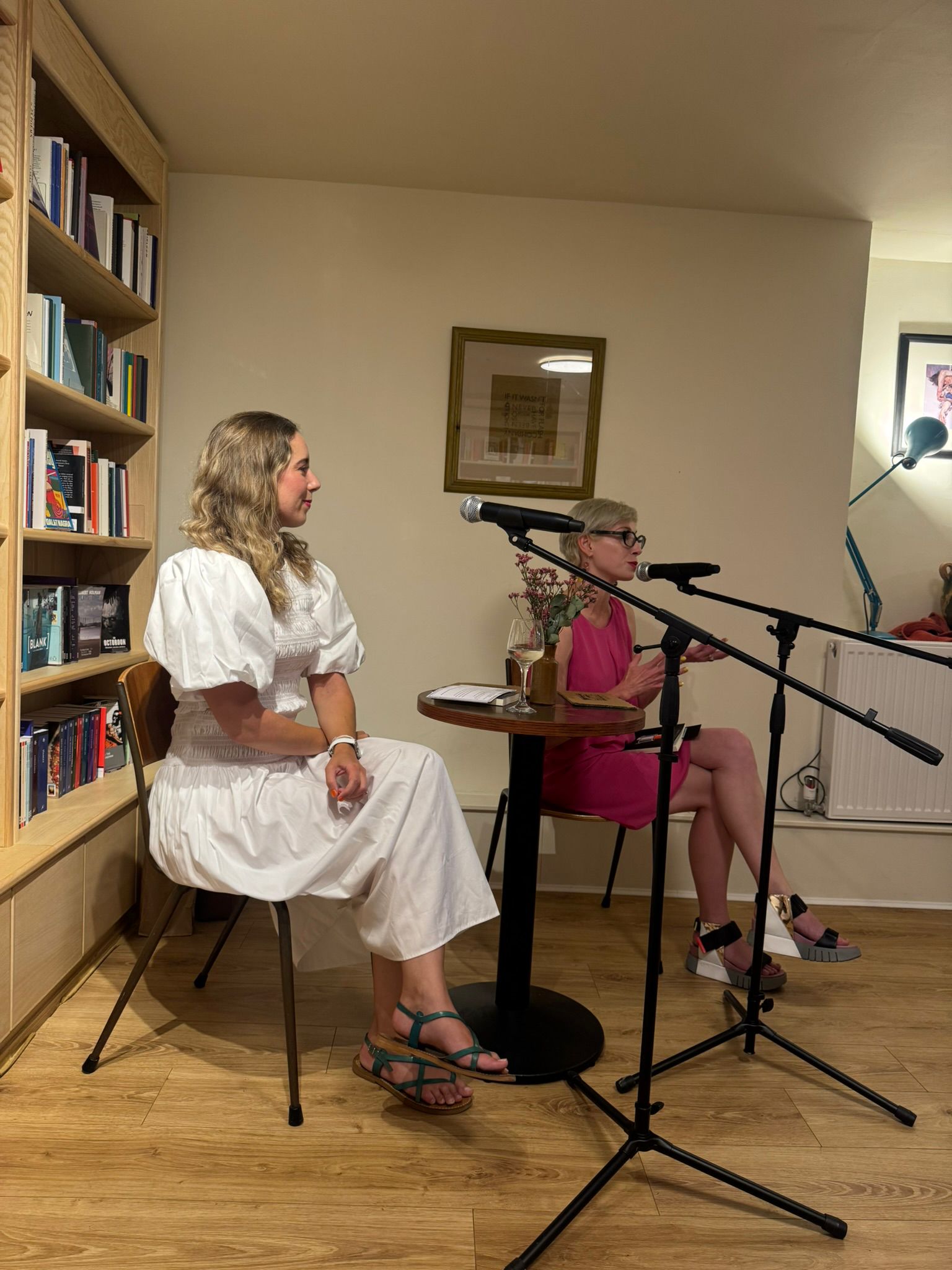
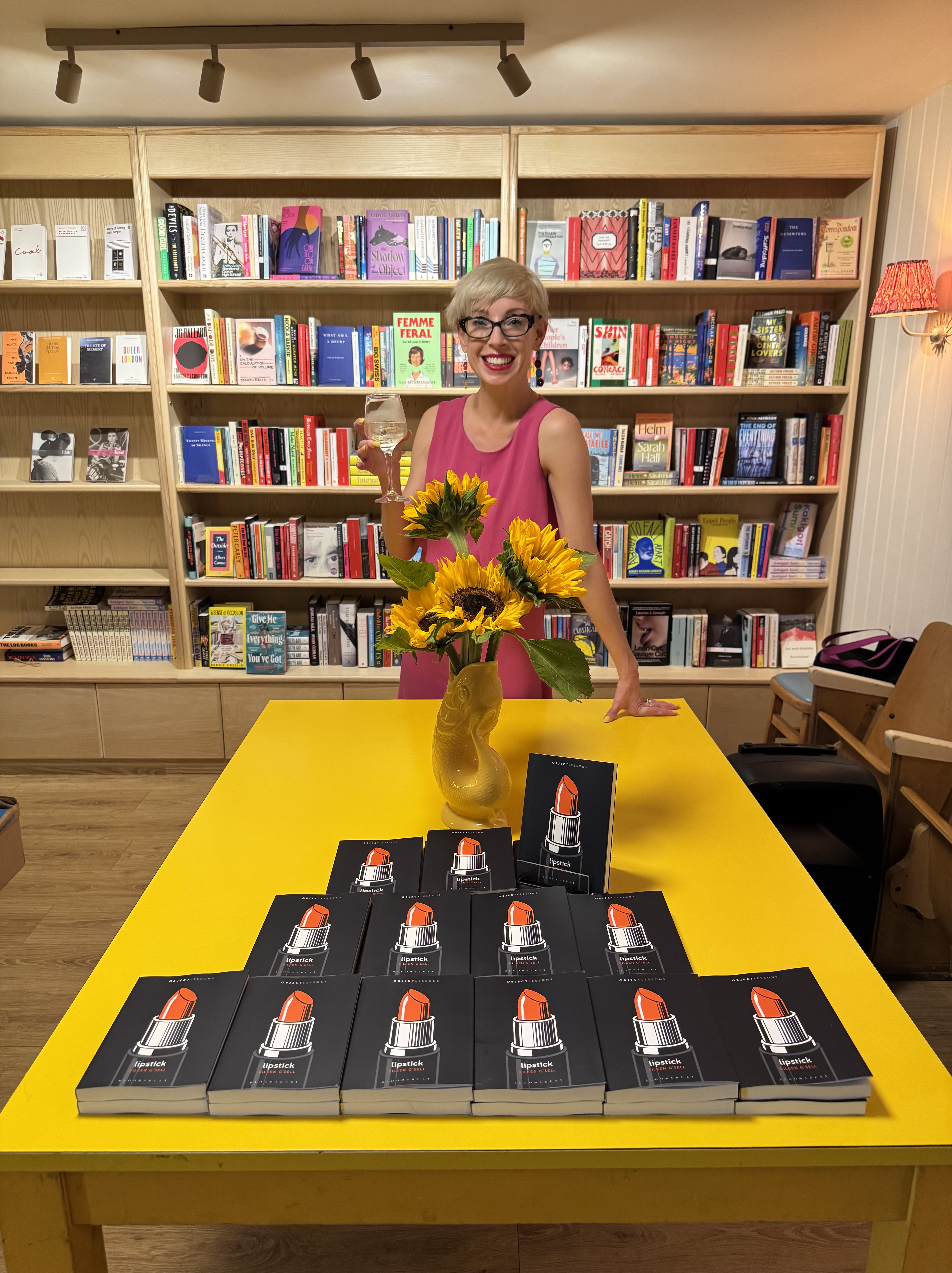
I love spotlighting the books that shape the way we think about beauty. So when American author, poet, culture critic and university teacher Eileen G’Sell reached out asking me to review Lipstick, her first non-fiction book, it was an immediate yes. And when she mentioned she was looking for a London venue for her book launch, the collaboration grew naturally into something bigger: an event, a conversation, and a celebration of her work. Lipstick, which joined Bloomsbury’s Object Lessons series earlier this year, is a sharp, thoughtful and timely exploration of beauty culture through the most iconic beauty item in western history. This Q&A is an extract from the event we hosted together.
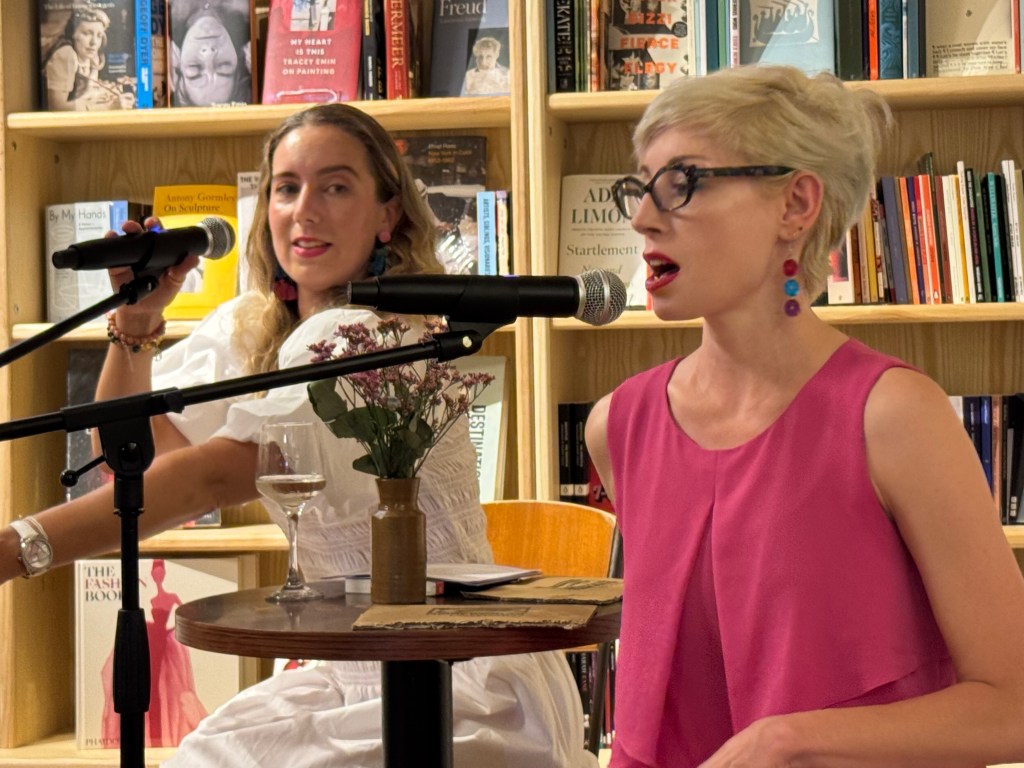
1. Let’s start with a few quick-fire questions to get to know each other
Your favourite lipstick shade?
EG: A cool red, though in summer months I often go for glossy coral or fuchsia
JF: Fuchsia is my go-to shade – it brings out my blue eyes and has been a signature colour in more ways than one, from my lipstick to my wedding and even my previous bathroom!
3 words you associate with lipstick?
EG: Provocative, playful, and potent
JF: fun, self-expression, confident
1 word to express how it makes you feel?
EG: Myself
JF: Ready
2. How did this book Lipstick come about?
As a long-time lipstick lover, I’ve prompted both praise and scrutiny for my boldly painted pout, which has led me to question why certain acts of self-adornment can still be controversial. My film and visual art reviews have often orbited questions about femininity, gender, and sexuality, but I’d never written specifically about beauty culture. As a fan of Bloomsbury’s Object Lessons series, I was quite surprised that it did not contain a title devoted to lipstick—a totem of the 20th century if there ever was! The series seemed the perfect opportunity to mingle intellectual rigor—and research–with a more accessible voice than usually found in academic writing. The idea that lipstick and beauty culture can’t also be serious subject matter has always bothered me. I wanted to challenge that assumption, while also writing a lively, provocative book for lipstick lovers (and loathers!) alike.
3. I grew up in Paris and one of my most confident, ultra stylish Parisian friends told me she chose not to wear red lipstick because she felt it would make her “look like a slut”. Red lipstick was associated with prostitution in 18th century. Does this history still leave its trace in today’s western cultures?
Absolutely! It’s easy to overlook how much sex work stigma still haunts the way we interpret a “colorful face”. The expression “she looks cheap” often suggests a woman wearing revealing clothing and a face heavy with makeup. Growing up, I never questioned where this expression came from, but in many ways it stems from the idea that an “expensive,” or high-quality, woman doesn’t indulge in something like bright lip colour: a classy woman eschews artifice. But why should we conflate an adorned face with lower-class status (sex work usually suggests class status, after all)? There’s more than a trace of classism at stake here, which can lead to women castigating other women for highly superficial reasons!
4. Through his work as a makeup artist, Max Factor initiated the transition from lipstick’s association with prostitution, to lipstick being synonymous with Hollywood glamour, to bringing it to the masses with his 50 cent lipstick in the early 1900s. Can lipstick now be considered accessible and for everyone?
Great question. A bit more than a century ago, Max Factor, Sr, encouraged everyday women to see themselves as capable of artistically transforming their own faces, not unlike the silent screen stars they likely idealized. Makeup, and lipstick specifically, was marketed as not only “corrective” of flaws, but as a rather meritocratic way to embellish one’s best features. Today, lipstick is usually only embraced by women, but I’d like to think that its transformative properties might be available to all genders someday. I also like to think that the artistic potential in lipstick might seem more obvious the less it seems an obligation. When something is expected, it’s more likely to seem a burden than a tool of creative expression.
5. Beauty and cosmetics are traditionally considered a very feminine space, but you talk a lot about how lipstick can be gender bending. Why did you choose to focus on that element?
It’s tempting to conflate lipstick with traditional feminine conventions; after all, so many women who grew up in the century wore lipstick everyday. But we can better understand—and appreciate!—the joy in femininity from those who identify as “femme,” but are not themselves straight, cisgender women. Gender nonconformists tend to embrace lipstick to claim a femininity rightfully theirs, but for which they might be stigmatized. And they often take more exciting approaches to lip colour and other makeup. I’m thinking of pop cultural figures like Boy George, Chappell Roan, and Alok Vaid-Menon. But I’m also thinking of every club kid who painted their mouths a moon blue or acid yellow, colours totally deviant from “nature” and any fixed gender assignment.
6. When feminists criticise lipstick wearing, do they reinforce harmful beliefs that a feminine woman cannot also be smart?
I think so, unfortunately. Many feminist-identified women continue to see lipstick—and other feminine beauty and fashion signifiers—as necessarily oppressive. Many have good reason for doing so as well, as indeed, strict standards of feminine presentation could be really harmful to women throughout history. But just because something can be oppressive doesn’t mean it always is. People—men and women—have taken pleasure in painting and adorning themselves for millennia. Most women who wear lipstick today don’t see it as participating in their own oppression. And, of course, many women gravitate toward feminine dress and sensory experience for the genuine pleasure it brings, pleasure that men are often denied when facing a wardrobe of drab neutrals and sober styling. The idea that women can either be feminine OR smart bears more than a trace of misogyny. It assumes that femininity always comes at the expense of intelligence, or that a woman relies on her so-called “feminine wiles” because she lacks other talents or skill sets.
These days, femme-forward scholars like Ciara Cremin and Sophie Lewis are openly challenging the idea that feminism means rejecting femininity. I’m grateful for their work, and consider Lipstick part of that larger conversation.
7. Bright lipstick is a positive visual cue of going against growing old quietly, as exemplified by Iris Apfel: growing old disgracefully meant flouting the idea that the older you get the less colourful you get to be. Can lipstick become a positive tool only once it is disassociated from the male gaze?
It was so important for me to include Iris in the book. Even before I was anywhere close to “middle age,” I came across beauty advice enjoining any woman over 35 to “soften” things up in terms of color, to do anything to avoid seeming garish. But the older a woman gets, the more confident she often becomes in herself. Why tone down the outside, if that is the case? I try to take more aesthetic risks the older I get. Besides, aging is hard! Lipstick can be fun and whimsical—a way to perk up.
8. “Would you mind taking off your lipstick?” Has anyone ever said that to you and in what context?
Yes—people have asked me this in a romantic context, for fear that I smudge a white collar or pillow-case. To me, making a mess is part of the deal, but I also appreciate that not all feel that way. More commonly, I’ve heard both men and women make comments like, “I can’t believe you’re wearing lipstick hiking” or “I don’t think I’ve ever seen you without lipstick.” Sometimes these comments are innocent enough, but the implication seems to be that I must be especially vain or high-maintenance to wear it so often. I actually pride myself on the ability to travel very light and get ready very efficiently. Lipstick is so quickly to apply, and it barely weighs anything! So the “high maintenance” / lipstick conflation isn’t very logical. But even if I was especially high maintenance, why would others need to comment on it? Why must there be stigma against making an effort, or making too much effort?
9. Men wearing lipstick makes it a unisex way of expressing yourself. With that in mind, which male celebrity would you like to see wear lipstick?
I love this question. I can think of two celebrities, for different reasons. Harris Dickinson is so unabashedly manly but has a terrific mouth; lipstick wouldn’t make him look “soft” so much as a masc diva of sorts! LaKeith Stanfield’s face is very pretty in a delicate way, and lipstick would make him all the more so.
If you have any burning questions you’d like to ask Eileen why not leave a comment below? Or you can get in touch with her directly on Instagram.

