
Ingredient-led skincare has been around for a while now, from hyaluronic acid serums to vitamin C boosters, and is showing no signs of slowing down. With all the actives on offer, it can be overwhelming to understand how they each promise to improve your skin’s appearance. One active that has consistently remained in the top 5 most searched for skincare ingredients in the last 4 years is retinol. And with good reason: retinoids, retinol and retinal have become popular for their powerful anti-aging and skin-enhancing effects. But what exactly are they, and how do they differ from one another?

What Are Retinoids?
1. Retinoids: an umbrella term that refers to all compounds derived from vitamin A, which include both natural and synthetic forms. Retinoids are considered the gold standard for anti-aging and treating various skin conditions such as acne, hyperpigmentation, and fine lines. They promote skin cell turnover, reduce the appearance of wrinkles, and help improve skin texture. Retinoids are available in both over-the-counter (OTC) and prescription formulations, with varying strengths.
2. Retinol: one of the most common over-the-counter forms of retinoids. It is a specific type of vitamin A included in serums, moisturisers, and creams. Milder than prescription-strength retinoids like tretinoin, it still offers many of the same benefits, including improved skin tone, reduced wrinkles, and increased collagen production, though it may take longer to see results.
3. Retinal: short for retinaldehyde, retinal is another derivative of vitamin A. It sits between retinol and tretinoin in terms of strength and efficacy, offering faster results while being gentler than prescription retinoids. When applied to the skin, retinal is converted into retinoic acid, which is the active form of vitamin A that provides all the skin benefits.
4. Tretinoin: also known as all-trans retinoic acid, it is a prescription medication used for the treatment of acne, fine lines or dark spots. It works by replacing older skin with newer skin and is stronger than retinol and retinal.

Skin Benefits of Retinoids, Retinol and Retinal
1. Retinoids skin benefits:
- Anti-Aging: known for their ability to stimulate collagen production, helping to plump the skin and reduce fine lines and wrinkles
- Acne Treatment: help regulate oil production and prevent clogged pore
- Pigmentation: can fade dark spots, hyperpigmentation and sun damage by promoting skin cell turnover and encouraging the growth of new, healthy skin cells
2. Retinol skin benefits:
- Smoother Skin Texture: helps exfoliate the skin, removing dead cells and improving skin texture and tone over time
- Prevention and Repair: prevents and reverses early signs of aging
- Gentler for Sensitive Skin: often recommended for those with more sensitive skin because it is less likely to cause irritation than stronger retinoids like tretinoin
3. Retinal skin benefits:
- Faster Results: because retinal is one step closer to the active form of vitamin A (retinoic acid), it works more quickly than retinol to rejuvenate the skin
- Balanced Potency: provides a good balance between efficacy and gentleness, offering visible results faster than retinol while being less irritating
- Pigmentation and Skin Clarity: helps improve skin texture and pigmentation, especially in cases of post-acne scars or sun damage
How to use retinoids
- Always apply retinoid products at night. Biovène Retinol Night Lift Tightening Cream works while you sleep to visibly smooth wrinkles, reduce the appearance of pores and enhance skin’s glow
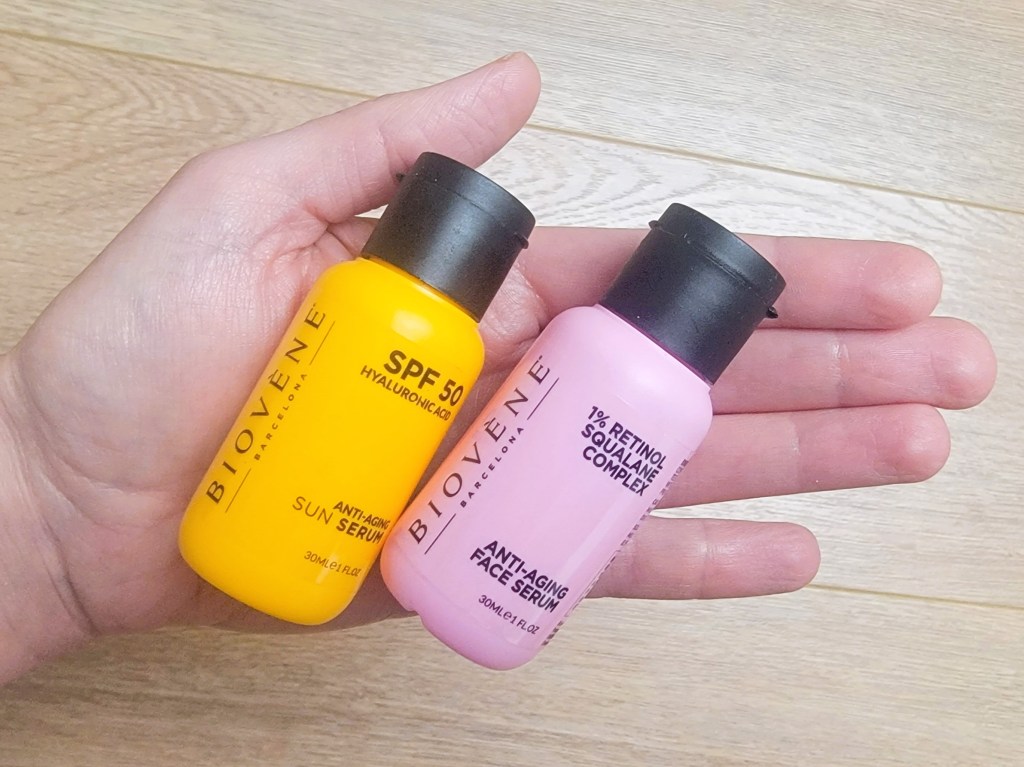
- Wear sunscreen during the day. Biovène Hyaluronic SPF 50 Anti-Aging Sun Serum promises all day UVA and UVB protection with hydrating, antioxidant and repairing ingredients.
- Perform a patch test 24 hours before applying all over your face
- Start with a low concentration and gradually build up the strength
- Avoid layering several retinoid products or using with exfoliating acids, this can cause irritation
- Stop using if it causes any skin irritation – retinoids can cause skin dryness and flaking. Biovène Anti-Aging 1% Retinol + Squalane Complex Serum offers retinol within a squalane complex (1% refers to the complex, not the retinol concentration alone), as squalane is a natural component found in skin that helps combat dryness
- Do not use it while pregnant or breastfeeding
Retinol vs retinal
Until recently, retinol was the most popular form of retinoid used in skincare, however there’s been a glut of retinal products flooding the market, no doubt in response to EU laws which limit the maximum concentration of retinol in face and body care products. The maximum retinol concentration is now 0.3% for face products and 0.05% for body products.
This law recognises that although retinol products may not sensitise skin when used individually, users are increasingly layering these products (serum + booster + moisturiser), resulting in higher overall concentrations and therefore leading to potential skin irritation and sensitivity to sunlight. Brands have taken this opportunity to focus on retinal instead, claiming that it’s around 10 times stronger than retinol, though this tends to translate into faster effects rather than stronger results. Whichever you chose to incorporate into your skincare routine, always make sure you start gradually and protect your skin from sunlight.
Features gifted products
 Fresh Beauty Fix